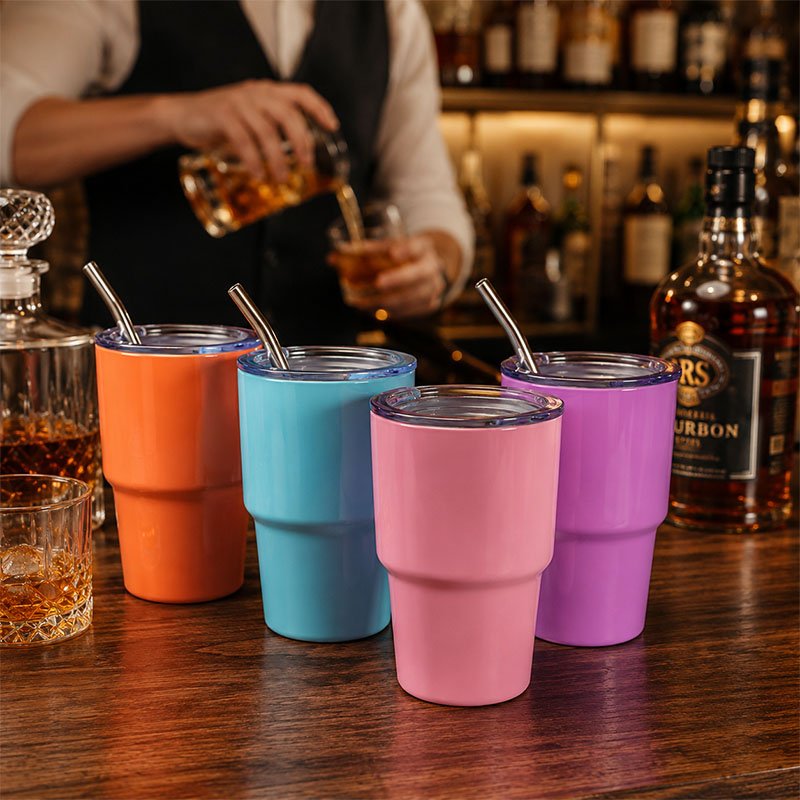


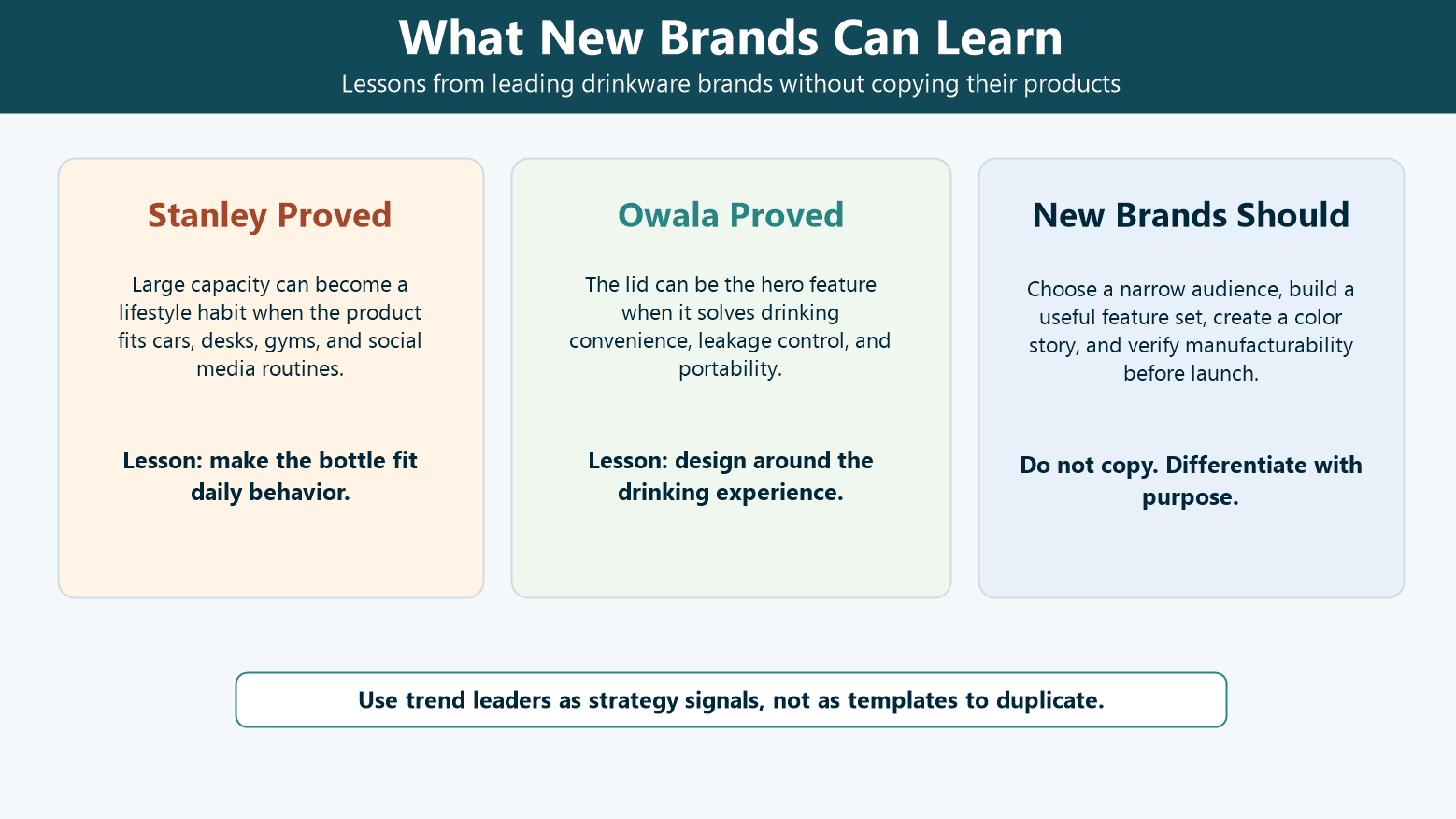
Stanley and Owala became successful because they turned drinkware from a simple container into a lifestyle product. Stanley proved that large-capacity tumblers with handles, cup-holder compatibility, strong colors, and social media visibility can create mass demand. Owala proved that lid design, leak resistance, and playful color identity can make a water bottle feel different in a crowded market.
For new drinkware brands in 2026, the goal should not be to copy Stanley or Owala. The smarter strategy is to learn from them: build products around real daily routines, make the lid experience useful, choose the right capacity, create a clear color story, and manufacture with consistent quality.
At Topnovo, we help brands, wholesalers, Amazon sellers, and promotional buyers develop custom stainless steel water bottles, tumblers, coffee mugs, lids, colors, logos, and packaging for new drinkware projects.
Why Stanley and Owala Changed the Market
Reusable drinkware is no longer just about holding water. It is about identity, convenience, routine, and design. Consumers carry bottles to the office, gym, school, car, outdoor activities, and travel. That means the product must work well and look good in daily life.
Stanley made the large handled tumbler feel like an everyday lifestyle accessory. Its popular Quencher line focuses on large capacity, handle comfort, straw use, cup-holder compatibility, and insulation. Owala grew from another direction: the lid. Its FreeSip bottle became known for a drinking experience that lets users sip through a straw or tilt to drink.
The lesson is clear: winning drinkware brands are not only selling stainless steel. They are selling a daily habit.
Functional Lids Matter More Than Ever
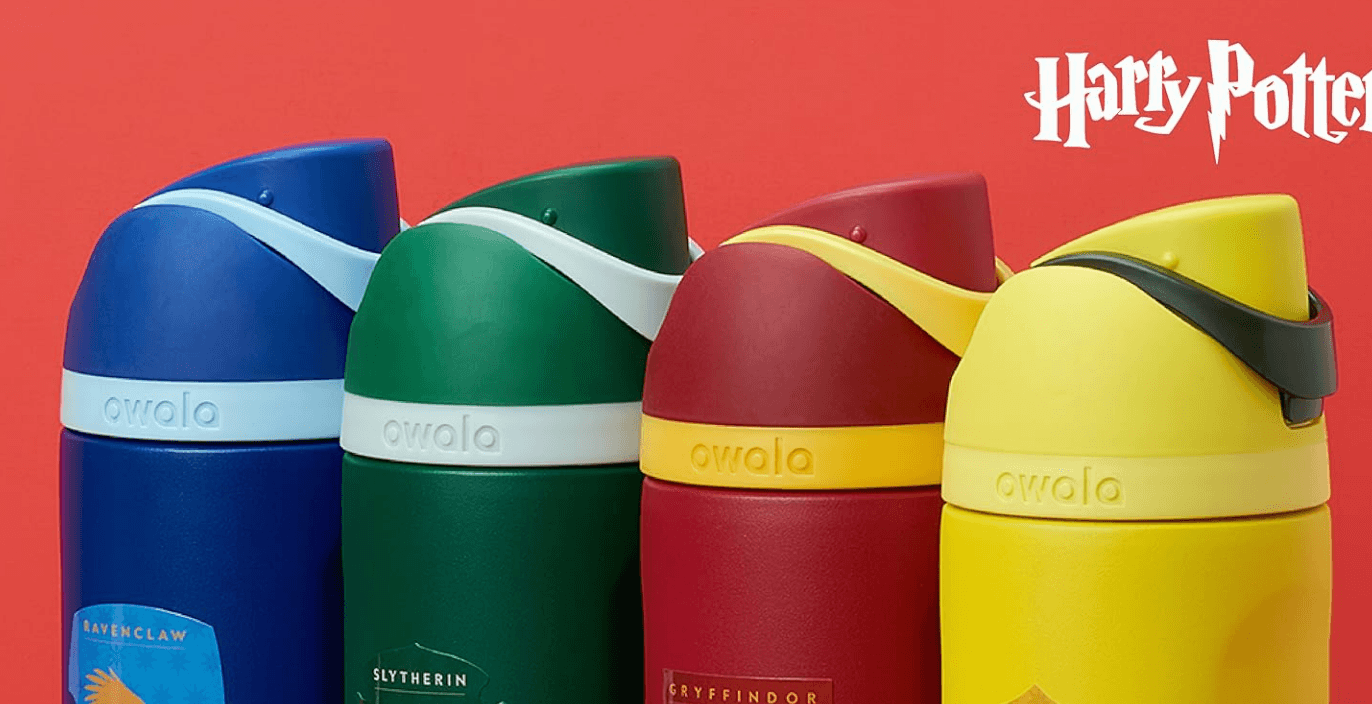
In 2026, the lid is one of the most important parts of a drinkware product. A bottle body may look attractive, but the lid decides how easy it is to drink, carry, clean, and trust.
New brands should choose lids based on use case:
| Use Case | Better Lid Direction |
|---|---|
| Gym and sports | Chug lid or flip lid |
| Office and commuting | Leak-resistant screw lid or sip lid |
| Kids and school | Locking straw lid or flip lid |
| Travel | Handle lid or secure straw lid |
| Coffee | Sip lid with splash control |
The key is not to copy an existing patented design. The key is to understand what your customer needs. A gym user wants fast flow. A student needs leak control. A coffee buyer wants comfort and splash resistance.
Topnovo’s guide on how to choose the right water bottle lid can help buyers compare straw lids, flip lids, screw lids, chug lids, handle lids, and coffee sip lids.
Capacity Should Match the Customer Routine
Large tumblers are still popular, especially 30 oz and 40 oz sizes. They look valuable, reduce refills, and work well for car, desk, and gym use.
But not every new brand should launch another oversized tumbler. The market is already crowded. Smaller, more focused products can still win if they solve a clear problem.
| Product Direction | Best For | Why It Works |
|---|---|---|
| 20-24 oz slim bottle | Office, school, commuting | Easier to carry |
| 30 oz tumbler | Daily hydration | Balanced size and convenience |
| 40 oz tumbler | Gym, desk, social media | Strong trend appeal |
| 12-20 oz coffee tumbler | Corporate gifts, office | Practical hot drink use |
| Kids bottle | School and family market | Clear repeat demand |
| Outdoor bottle | Travel, hiking, camping | Premium positioning |
Capacity should follow the user’s routine, not only the trend.
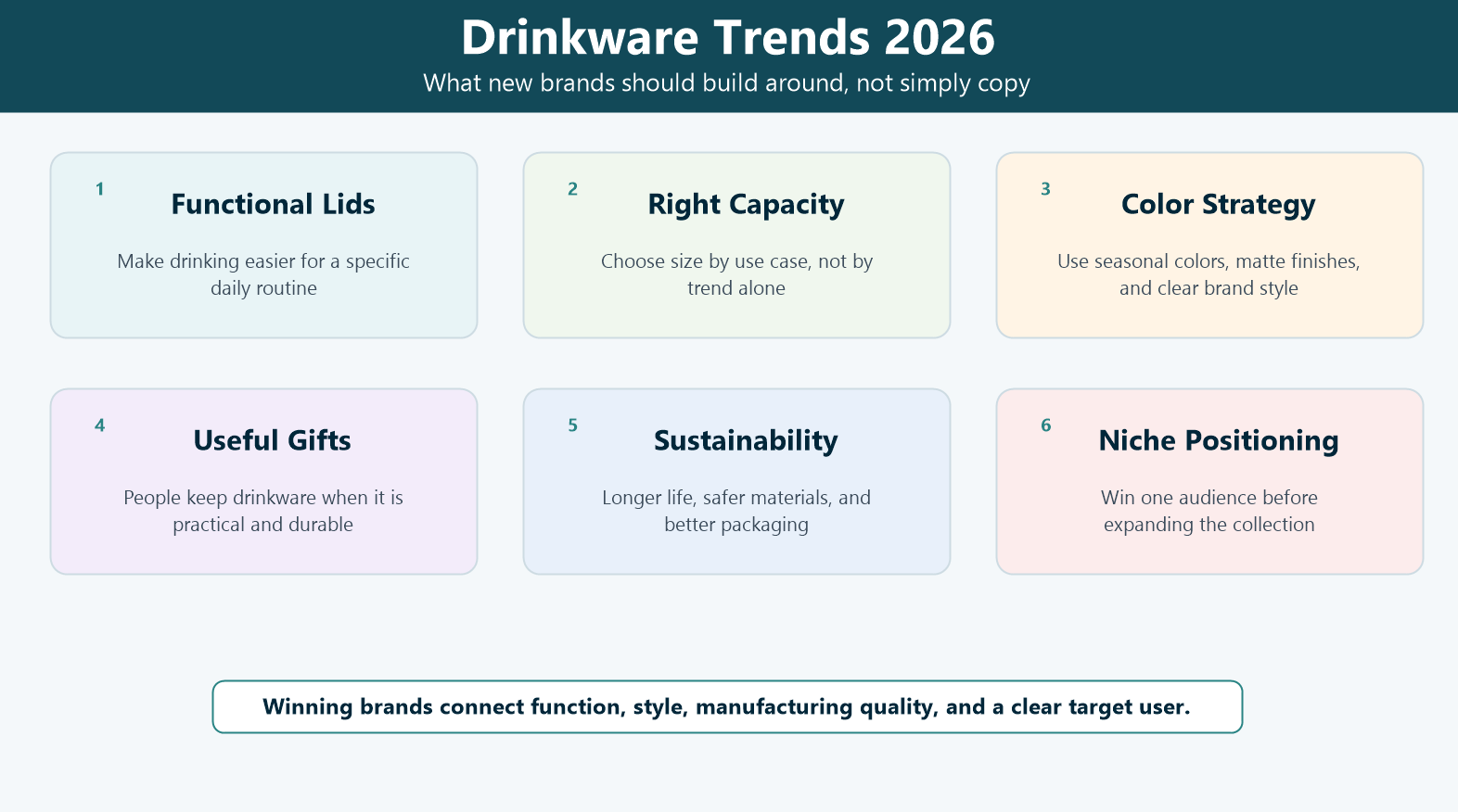
Color Strategy Can Create Repeat Purchases
Stanley and Owala both showed that color can drive demand. Many customers do not buy only one bottle. They buy different colors for seasons, moods, outfits, collections, or gifts.
For new brands, color is one of the easiest ways to differentiate without investing in a new mold.
Strong color directions include:
- Soft neutrals for office and lifestyle brands
- Earth tones for outdoor and eco-positioned products
- Bright contrast colors for youth and sports markets
- Seasonal limited colors for social media campaigns
- Matte powder coating for premium daily use
- Metallic or gradient finishes for gift collections
But color should never be selected alone. It must work with coating durability, logo method, packaging style, and target price.
For example, laser engraving often works well on powder-coated bottles. UV printing may be better for colorful logos. Screen printing can be suitable for simple logos and larger quantities. If branding is important, review Topnovo’s custom logo water bottles before confirming your finish.

Useful Drinkware Wins Over Cheap Giveaways
For promotional buyers and corporate gift companies, practicality is now more important than novelty. ASI’s 2026 Ad Impressions Study notes that usefulness is a key reason people keep drinkware.
This matters because a cheap bottle may reduce purchase cost, but if recipients do not use it, the brand exposure is lost.
A bottle people keep usually has:
- Comfortable hand feel
- Reliable lid
- Good insulation
- Attractive color
- Subtle logo placement
- Easy cleaning
- Suitable capacity
- Packaging that feels giftable
New brands should think less like “product sellers” and more like “habit builders.” If a bottle fits into a customer’s morning commute, desk routine, workout, school day, or travel bag, it has a better chance of becoming part of daily life.
Sustainability Must Be Practical
Sustainability is still important, but buyers are becoming more realistic. A reusable bottle is not automatically sustainable if it leaks, scratches, breaks, or gets replaced quickly.
Practical sustainability means:
- Durable stainless steel material
- Longer product life
- Replaceable lids or straws
- Strong coating durability
- Reduced plastic packaging
- Recyclable paper boxes
- Clear food-contact documents
- Better sampling to avoid overproduction
For most daily-use bottles, 304 stainless steel is practical. For premium, coastal, outdoor, or marine-positioned products, 316 stainless steel can be considered. The best sustainability message is simple: make a product customers will actually keep and use.
What New Brands Should Not Copy
Many new drinkware brands make the same mistake: they see a viral product and try to copy its shape, lid, color, or marketing style. This is risky.
Do not copy:
- Patented lid structures
- Exact bottle silhouettes
- Famous brand color combinations
- Product names or visual identity
- Overcrowded 40 oz tumbler positioning
- Claims that your product cannot support
- Viral style without real quality control
Copying may create legal, branding, and quality risks. More importantly, it gives customers no reason to choose your product.
A better approach is to ask: what customer group can we serve better?
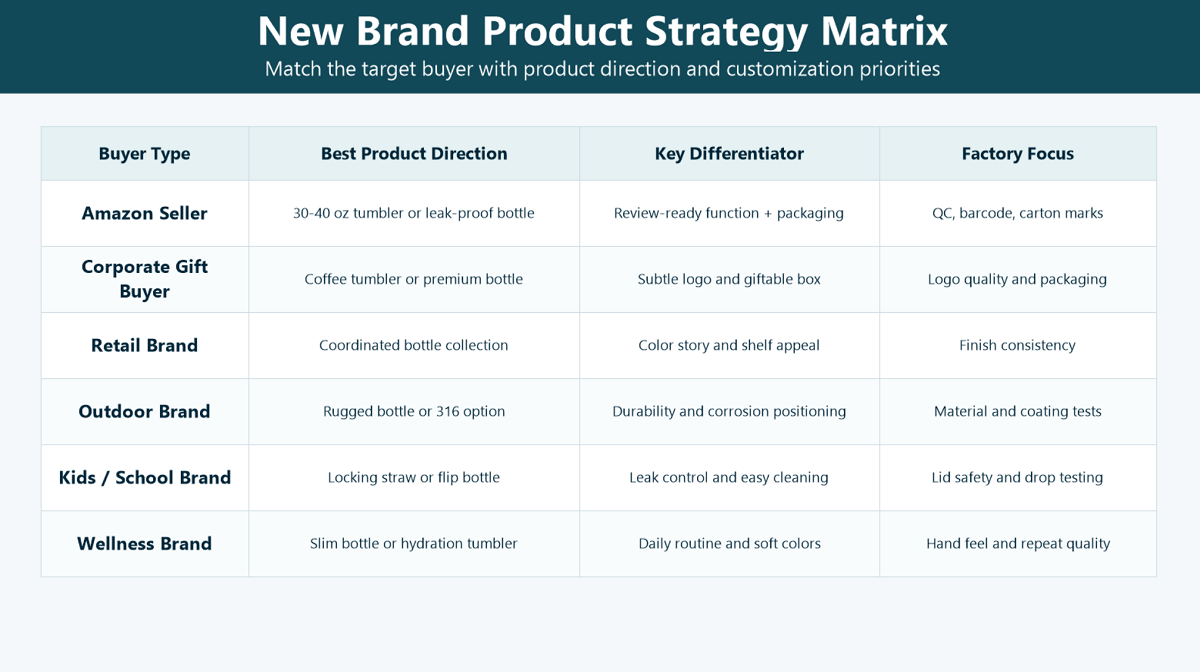
New Brand Product Strategy Matrix
| Buyer Type | Best Product Direction | Key Differentiator | Factory Focus |
|---|---|---|---|
| Amazon seller | 30-40 oz tumbler or leak-proof bottle | Review-ready function and packaging | QC, barcode, carton marks |
| Corporate gift buyer | Coffee tumbler or premium bottle | Subtle logo and giftable box | Logo quality and packaging |
| Retail brand | Coordinated bottle collection | Color story and shelf appeal | Finish consistency |
| Outdoor brand | Rugged bottle or 316 option | Durability and corrosion positioning | Material and coating tests |
| Kids or school brand | Locking straw or flip bottle | Leak control and easy cleaning | Lid safety and drop testing |
| Wellness brand | Slim bottle or hydration tumbler | Daily routine and soft colors | Hand feel and repeat quality |
This matrix helps new brands move from trend watching to product planning.
Product Development Checklist
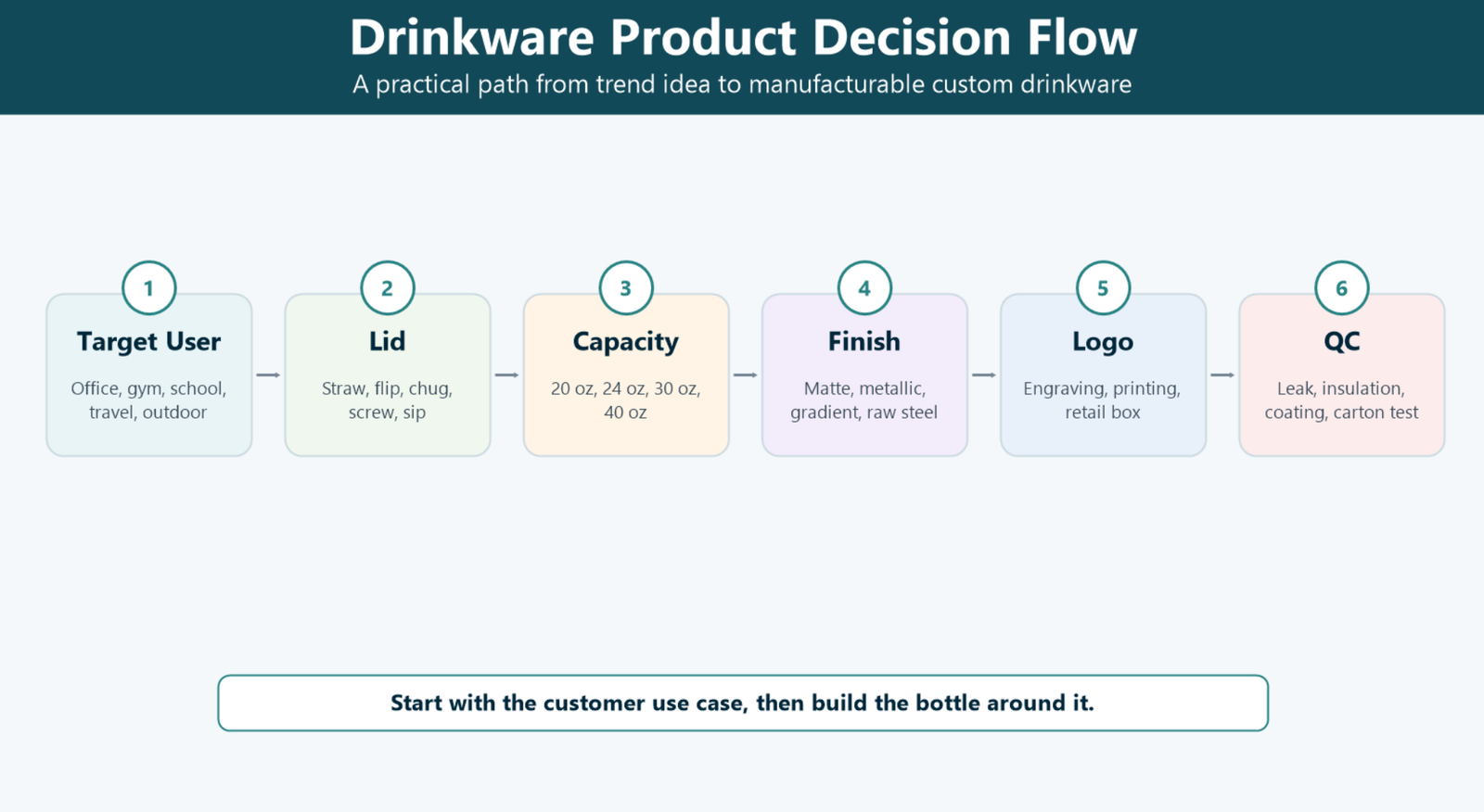
Before starting a new drinkware project, confirm:
| Decision Area | What to Decide |
|---|---|
| Target user | Office, gym, school, travel, outdoor, corporate gift |
| Product type | Bottle, tumbler, coffee mug, kids bottle, sports bottle |
| Capacity | 12 oz, 20 oz, 24 oz, 30 oz, 40 oz |
| Lid style | Straw, flip, screw, chug, handle, sip |
| Material | 304 stainless steel, 316 stainless steel, BPA-free lid parts |
| Finish | Powder coating, spray painting, metallic, gradient, raw steel |
| Logo method | Laser engraving, screen printing, UV printing, heat transfer |
| Packaging | White box, kraft box, gift box, private label packaging |
| Quality tests | Leak, insulation, coating, logo, drop, packaging |
| Launch strategy | Test order, seasonal drop, Amazon launch, wholesale collection |
This is where a good manufacturer adds value. A supplier should not only quote a price. It should help buyers avoid wrong lid choices, weak coating, unsuitable capacity, poor packaging, and risky customization.
Skinny Tumblers and Accessories: Are They Still Popular in 2026?
Yes. Skinny tumblers are still popular in 2026 because they are simple, lightweight, easy to customize, and suitable for office use, coffee, gifts, and daily hydration. Most skinny tumblers are 16 oz to 20 oz straight-wall stainless steel cups, which makes them easy for laser engraving, screen printing, and UV printing.
For brands, the opportunity is not only the tumbler itself. Accessories such as straw lids, sliding lids, reusable straws, silicone boots, cleaning brushes, and gift boxes can make a basic skinny tumbler feel more useful and retail-ready.
| Skinny Tumbler Option | Best For | Useful Add-ons |
|---|---|---|
| 16 oz skinny tumbler | Coffee, office, corporate gifts | Sip lid, gift box |
| 20 oz skinny tumbler | Daily hydration, promotional gifts | Straw lid, reusable straw |
| Powder-coated skinny tumbler | Retail brands, Amazon sellers | Silicone boot, color box |
| Skinny tumbler gift set | Corporate gifts, holiday campaigns | Straw, brush, gift packaging |
At Topnovo, we help brands choose the right tumbler size, logo method, lid, color, and packaging before bulk production.
What Are the Best Types of Mugs for Promotional Giveaways?
The best mugs for promotional giveaways are insulated coffee tumblers, stainless steel travel mugs, ceramic mugs, camp mugs, and gift-boxed mug sets. For most B2B campaigns, insulated stainless steel mugs are a strong choice because they are useful, durable, easy to customize, and have higher perceived value.
| Mug Type | Best For | Buyer Tip |
|---|---|---|
| Insulated coffee tumbler | Office gifts, retail, corporate use | Good daily-use value |
| Stainless steel travel mug | Commuting, events, employee gifts | Check lid fit and cup-holder size |
| Ceramic mug | Office giveaways, low-cost campaigns | Best for indoor use |
| Camp mug | Outdoor brands, lifestyle gifts | Good for casual branding |
| Gift-boxed mug set | Holiday gifts, client gifts | Packaging improves perceived value |
For promotional buyers, the best mug is not always the cheapest one. A mug that people actually use will create more brand exposure than a low-cost product that is quickly discarded.
Topnovo helps brands choose mug materials, logo methods, lids, packaging, and quality checks for promotional drinkware projects.
How Topnovo Supports New Drinkware Brands
At Topnovo, we support custom stainless steel drinkware projects for brands, wholesalers, Amazon sellers, promotional gift companies, and distributors.
Our support includes:
- Custom stainless steel water bottles, tumblers, and coffee mugs
- OEM and ODM drinkware development
- Lid, color, coating, logo, and packaging customization
- Sample development before bulk production
- Quality control for leakage, insulation, coating, and logo
- Export packaging and Amazon FBA support
If you already have a product direction, you can start with a custom stainless steel water bottle project. If you are still testing the market, it is safer to begin with an existing mold, custom color, logo, and packaging before investing in a fully custom structure.
You can also read How to Buy Bulk Insulated Water Bottles from China if you are planning your first bulk order.
Final Thoughts
Stanley and Owala are not successful only because they make attractive bottles. They are successful because they understand daily behavior, functional design, color identity, and customer routines.
For new drinkware brands in 2026, the opportunity is not to copy them. The opportunity is to build a more focused product for a specific audience.
The next successful drinkware brand may not be the biggest one. It may be the one that understands one customer group better than everyone else.