

Quick Answer
To create your own water bottle brand, start by understanding your target customer and their daily needs. Choose the right bottle type, material, lid, size, logo method, packaging, and sales channel. Then work with a reliable manufacturer to make samples, test quality, protect your trademark, and improve the product based on customer feedback. A strong brand needs clear positioning, useful design, stable supply, and continuous improvement.
This guide explains the practical steps to create your own water bottle brand.
Brand Creation Process Overview
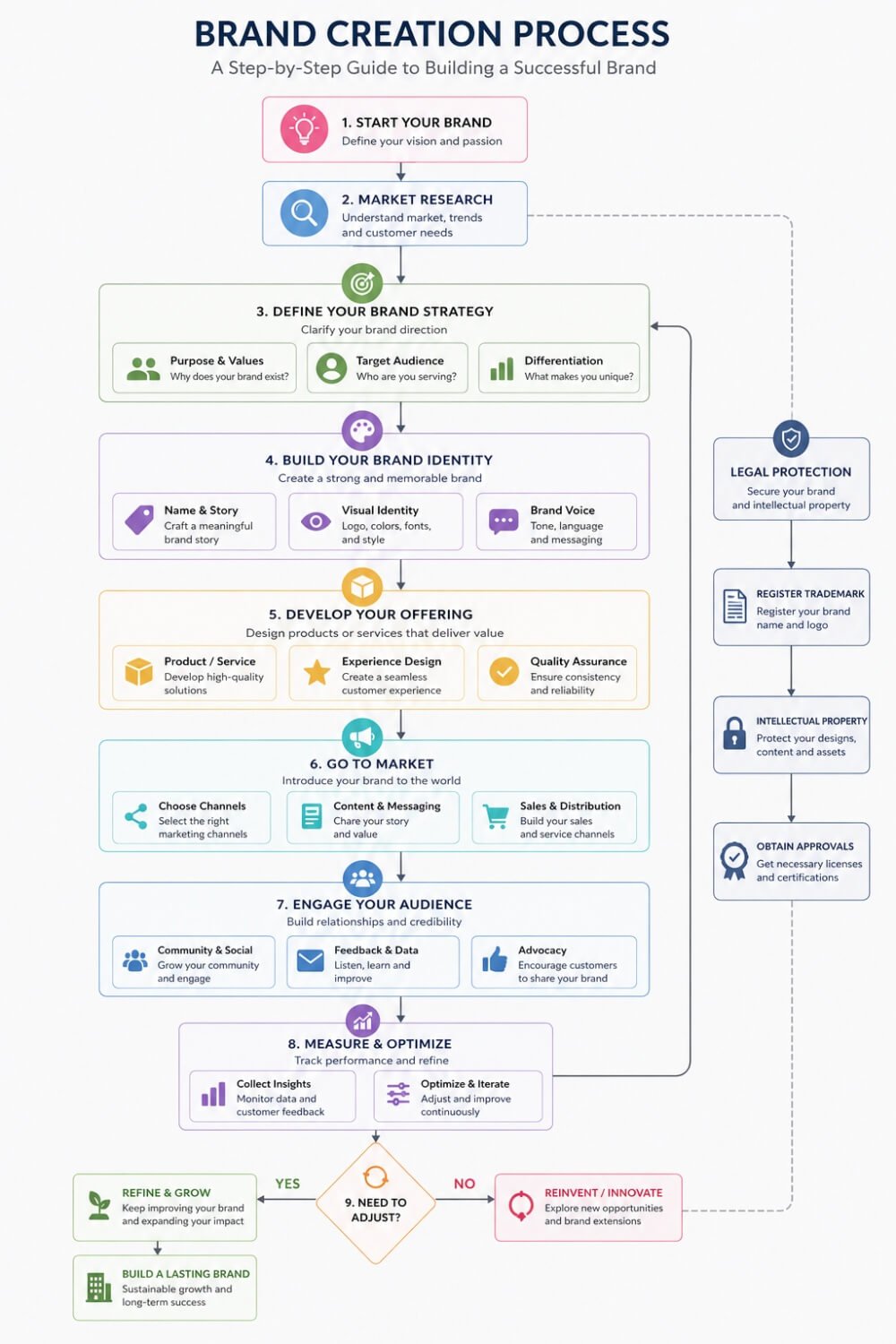
A water bottle brand should be built step by step. The key process includes market research, brand positioning, product design, legal protection, manufacturing, sales channels, and customer feedback.
A strong brand is not created by one good-looking bottle. It is built through the right product choices, reliable quality, clear branding, and continuous improvement.
Step 1: Start with the Customer
Before choosing a bottle, first understand who will use it and what they need. Different customers care about different product features.
| Target Customer | Key Needs |
| Fitness users | Large capacity, straw lid, easy grip |
| Office workers | Clean design, cup holder fit, insulation |
| Kids | Safe materials, leak-proof lid, easy cleaning |
| Outdoor users | Durability, insulation, large capacity |
| Corporate gift buyers | Logo effect, packaging, price, delivery |
| Amazon sellers | Good photos, stable quality, low return rate |
For example, fitness users care about easy drinking and grip, while parents care more about safety and leakage. Corporate gift buyers focus on logo quality, packaging, and delivery time.
When you understand the customer first, it becomes much easier to choose the right bottle.
Step 2: Research the Market
Market research helps you choose the right product and avoid mistakes. Before designing your bottle, study what customers already buy and what problems they mention in reviews.
Check Amazon best sellers, TikTok trends, retail shelves, competitor websites, and customer feedback. Focus on bottle size, lid type, handle design, color, packaging, price, and negative reviews.
Common problems include leaking lids, weak coating, poor insulation, difficult cleaning, damaged packaging, and uncomfortable handles.
These problems can become your brand opportunities. For example, if many customers complain about leaking, a better leak-proof lid can become your selling point. If coating scratches easily, better coating quality can help your product stand out.
Good market research should answer four questions:
- Who is your target customer?
- What bottle do they need?
- What problems do current products have?
- How can your brand make the product better?
Step 3: Define Your Brand Position
Your brand position tells customers why they should choose your water bottle. Avoid general messages like “high-quality water bottles.” Your positioning should be clear and specific.
For example:
- Leak-proof bottles for school and daily use
- Premium insulated tumblers for office and travel
- Sports bottles for fitness and gym users
- Reusable bottles for lifestyle and eco-conscious brands
- Custom drinkware for corporate gifts and retail programs
Your brand position should guide your product design, packaging, content, and sales channel.
If you target fitness users, focus on grip, capacity, and easy drinking. If you target office users, focus on design, insulation, and cup holder fit. If you target corporate gifts, focus on logo effect, packaging, price, and delivery.
A clear position makes your product easier to understand and easier to remember.
Step 4: Build Your Brand Identity
Brand identity is how customers recognize and remember your brand. It includes your brand name, logo, colors, packaging, product photos, and communication style.
Your brand name should be simple, easy to pronounce, and suitable for your target market. Before using it, check the domain name, social media accounts, and trademark availability.
Your logo should also be simple and practical. Because water bottles are curved, complicated logos may not print clearly. Make sure your logo works well with laser engraving, silk screen printing, UV printing, or heat transfer.
Your visual style should match your customer. A premium brand may use clean design and soft colors. A sports brand may use bold colors and active images. A kids bottle brand may use bright colors and friendly graphics.
Good brand identity should not only look good. It should help customers understand your product quickly and build trust.
Step 5: Choose the Right Bottle Product
Choosing the right product is critical. A good bottle can bring good reviews, repeat orders, and customer trust. A poor bottle can lead to complaints, returns, and brand damage.
For a new water bottle brand, it is better to start with one or two strong products instead of too many styles.
When choosing a bottle, focus on these key details:
Product Detail | Why It Matters |
Material | Affects safety, durability, weight, and cost |
| Lid structure | Affects leakage, drinking comfort, and reviews |
| Capacity | Should match daily use, gym, travel, or kids use |
| Coating quality | Affects scratch resistance and appearance |
| Mouth opening | Affects cleaning and ice cube use |
| Cup holder fit | Important for car and daily use |
| Logo durability | Affects long-term brand image |
| Packaging strength | Affects shipping damage and customer experience |
Your product should also match your sales channel. Amazon products need good photos, strong packaging, stable quality, and low return risk. Retail products need attractive packaging and shelf appeal. Corporate gift products need clean logo placement, reasonable price, and reliable delivery.
Before mass production, always test samples. Check leakage, insulation, lid function, coating, logo, color, packaging, and real user experience. Do not approve a sample only from photos. Test it like a real customer would use it.
Step 6: Find a Reliable Water Bottle Manufacturer
Your manufacturer directly affects your product quality, delivery time, and brand reputation. A good supplier should not only make bottles. It should also help you choose the right product, test samples, control quality, and avoid production risks.
A reliable water bottle manufacturer should support:
- OEM, ODM, and private label orders
- Material and product structure advice
- Logo, color, and packaging customization
- Sample development before mass production
- Quality testing and inspection
- Compliance support such as FDA, LFGB, REACH, and Prop 65
- Stable production and delivery
Before choosing a supplier, ask about their MOQ, sample lead time, quality control process, testing methods, compliance documents, and shipment inspection.
Do not choose a supplier only because the price is low. A leaking lid, weak coating, late shipment, or poor packaging can cost much more than a small price difference. A reliable manufacturer helps protect your brand quality and reduce long-term risk.
Step 7: Protect Your Brand Legally
Before launching your water bottle brand, make sure your brand name and logo can be used legally. Trademark issues can become expensive after you have already created packaging, product photos, websites, and inventory.
Key steps include:
- Check trademark availability
- Register your brand name and logo
- Check domain name and social media account availability
- Protect custom designs if needed
- Use clear agreements with suppliers
- Confirm product compliance for your target market
For drinkware products, compliance is also important. Buyers may ask for food-contact safety documents, BPA-free materials, FDA-related compliance, LFGB, REACH, Prop 65, or other testing support.
Legal protection helps reduce risk and makes your brand more professional for Amazon, retail, wholesale, and corporate gift channels.
Step 8: Build Sales and Marketing Channels
After your product and brand are ready, choose the right sales channels.
Common channels include Amazon, Shopify, TikTok Shop, Instagram, retail stores, wholesale distributors, corporate gift companies, trade shows, and LinkedIn B2B development.
Your product page should clearly show the key information: material, capacity, lid type, insulation performance, dimensions, packaging, cleaning method, and use scenario.
For B2B buyers, your website should also show MOQ, customization options, sample lead time, production lead time, quality control, certifications, packaging support, and shipping options.
Good marketing is not only about getting traffic. It should help customers understand your product, trust your brand, and make decisions faster.
Step 9: Collect Feedback and Improve
Launching your water bottle brand is only the beginning. After sales start, collect feedback from customers, reviews, distributors, and customer service messages.
Focus on repeated problems. If customers complain about leaking, improve the lid or sealing ring. If the bottle is hard to clean, adjust the mouth opening or lid design. If packaging is damaged during shipping, improve the box and carton protection.
Customer feedback helps you improve the next production run. A strong brand starts with one good product, tests the market, improves based on feedback, and then expands.
How Long Does It Take to Launch a Water Bottle Brand?
The timeline depends on the customization level.
If you use an existing bottle model with custom logo and packaging, the process usually takes about 30–35 days. If you need a custom mold, new lid structure, or unique bottle shape, it usually takes about 2–3 months or longer.
The basic process includes product selection, sample development, sample approval, packaging confirmation, mass production, quality inspection, and shipping.
Common Mistakes to Avoid
Many new water bottle brands fail because they focus too much on appearance and ignore real product experience.
Common mistakes include:
- Choosing a product only because it is trending
- Launching too many styles too early
- Ignoring leakage and coating quality
- Using weak packaging
- Choosing a supplier only by low price
- Not checking trademark availability
- Not testing samples carefully
- Not collecting customer feedback
A better strategy is to start with one strong product, test the market, improve based on feedback, and then expand step by step.
FAQ
1.How much does it cost to start a water bottle brand?
The cost depends on the bottle type, order quantity, customization, packaging, testing, product photos, marketing, and shipping. Using an existing bottle model with custom logo and packaging is usually cheaper than developing a new custom mold.
2.What type of water bottle is best for a new brand?
Stainless steel insulated bottles, tumblers, sports bottles, kids bottles, and coffee tumblers are good starting options. The best choice depends on your target customer, price range, and sales channel.
3.Do I need a custom mold to start?
No. Most new brands can start with existing bottle models and customize the logo, color, finish, lid, and packaging. Custom molds are better for brands with a clear product idea, larger budget, and proven market demand.
4.How can I make my water bottle brand different?
You can make your brand different through target audience, lid design, bottle shape, color system, packaging, quality, sustainability, or a specific use scenario. The difference should be useful, not just decorative.
5.What should I test before mass production?
You should test leakage, insulation, lid function, coating adhesion, logo durability, color accuracy, packaging strength, and overall user experience.
6.How do I choose a water bottle manufacturer?
Choose a manufacturer with drinkware experience, sample support, customization ability, quality control, compliance support, stable production capacity, and clear communication.
7.stainless steel better than plastic for a water bottle brand?
Yes, stainless steel is usually better for premium and insulated water bottle brands. It is durable, reusable, and keeps drinks cold or hot for longer.
Plastic or Tritan bottles are better for lightweight, kids, sports, or lower-cost product lines.
8.Should I start with private label or custom mold development?
Most new brands should start with private label or existing mold customization. It costs less, takes less time, and helps you test the market faster.
Custom mold development is better when you have a clear product idea, larger budget, and proven customer demand.
9.What is the MOQ for custom water bottles?
The MOQ depends on the bottle type and customization method. Logo customization usually has a lower MOQ. Custom colors, custom packaging, new lids, or custom molds usually require a higher MOQ.
New brands should start with a reasonable MOQ to test the market before placing larger orders.
Conclusion
Creating your own water bottle brand is not just about adding a logo to a bottle. You need to understand your target customer, choose the right product, test samples carefully, protect your brand legally, and work with a reliable manufacturer.
Start with one strong product that fits a real use scenario. Focus on quality, packaging, user experience, and customer feedback before expanding your product line.
A successful water bottle brand grows step by step. When your product solves a real customer need and your supply chain is stable, your brand has a better chance to stand out in the competitive drinkware market.
Need Help Developing Your Water Bottle Brand?
If you are planning to create a private label or custom water bottle brand, working with an experienced drinkware manufacturer can help you choose the right product, test samples, control quality, develop packaging, and prepare for bulk production.