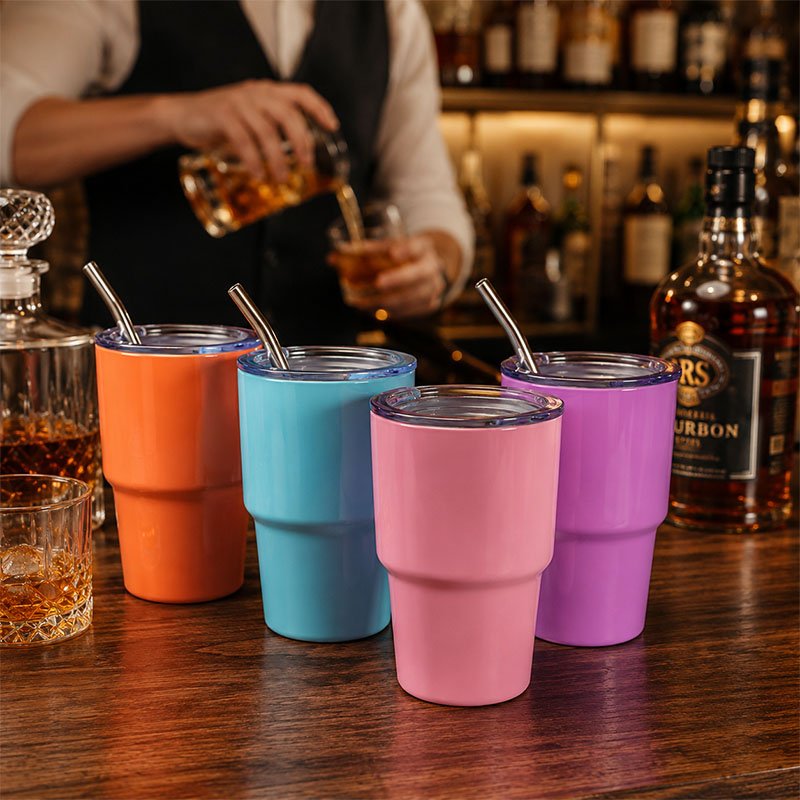
Comparing 304 vs 316 stainless steel water bottles is only one part of specifying drinkware. Identify the grade of each relevant component and the conditions the finished product must meet. A material name does not establish the suitability of the lid, gasket, coating, assembly or complete product.
Separate alloy selection from complete-product claims
Steel producers distinguish grades by their composition and properties. For example, Outokumpu describes 316-family grades in its molybdenum-alloyed Supra range. This is a material distinction; it is not evidence that every finished bottle described as 316 has passed your required product evaluation.
Request a component-level material list. Identify the inner body, outer body and any other metal parts rather than accepting an ambiguous all-stainless description. Ask what documentation supports the specified materials and how it relates to the units being supplied.
Describe the intended conditions for comparison
Explain the beverages, cleaning approach and usage conditions relevant to the project. Ask the supplier to propose a suitable construction and the verification it requires. Do not assume that a higher grade number automatically resolves all design or cleaning considerations.
Compare otherwise equivalent configurations. If one offer also changes body thickness, lid, decoration or packing, the price difference cannot be attributed to the steel grade alone. Keep the alternatives sufficiently clear for purchasing and technical reviewers to evaluate together.
Approve the product your customer will receive
Review the complete sample with the intended components and finish. Confirm the documentation required for the destination and intended use with the appropriate technical parties. Keep product-specific evidence separate from a general material datasheet.
Write the selected materials into the approved specification and define the review needed for substitutions. Preserve the relevant records for repeat orders. The practical buying decision is a controlled construction supported by evidence, not a premium-sounding number on a listing.
Buyer checklist
- Identify inner and outer body grades separately.
- Link material evidence to the proposed supply.
- Compare matching configurations and intended use conditions.
- Treat substitutions as a reviewable specification change.
Does 316 automatically mean a bottle is approved for every drink or cleaning method?
No. Evaluate the finished configuration and its documented use conditions. Material selection alone does not approve the complete product.
Supporting source: Review the source and its scope.
Discuss the requirements for your project
Review Topnovo’s related drinkware support, then send your product brief with the configuration, order quantity and evidence you need before approval.